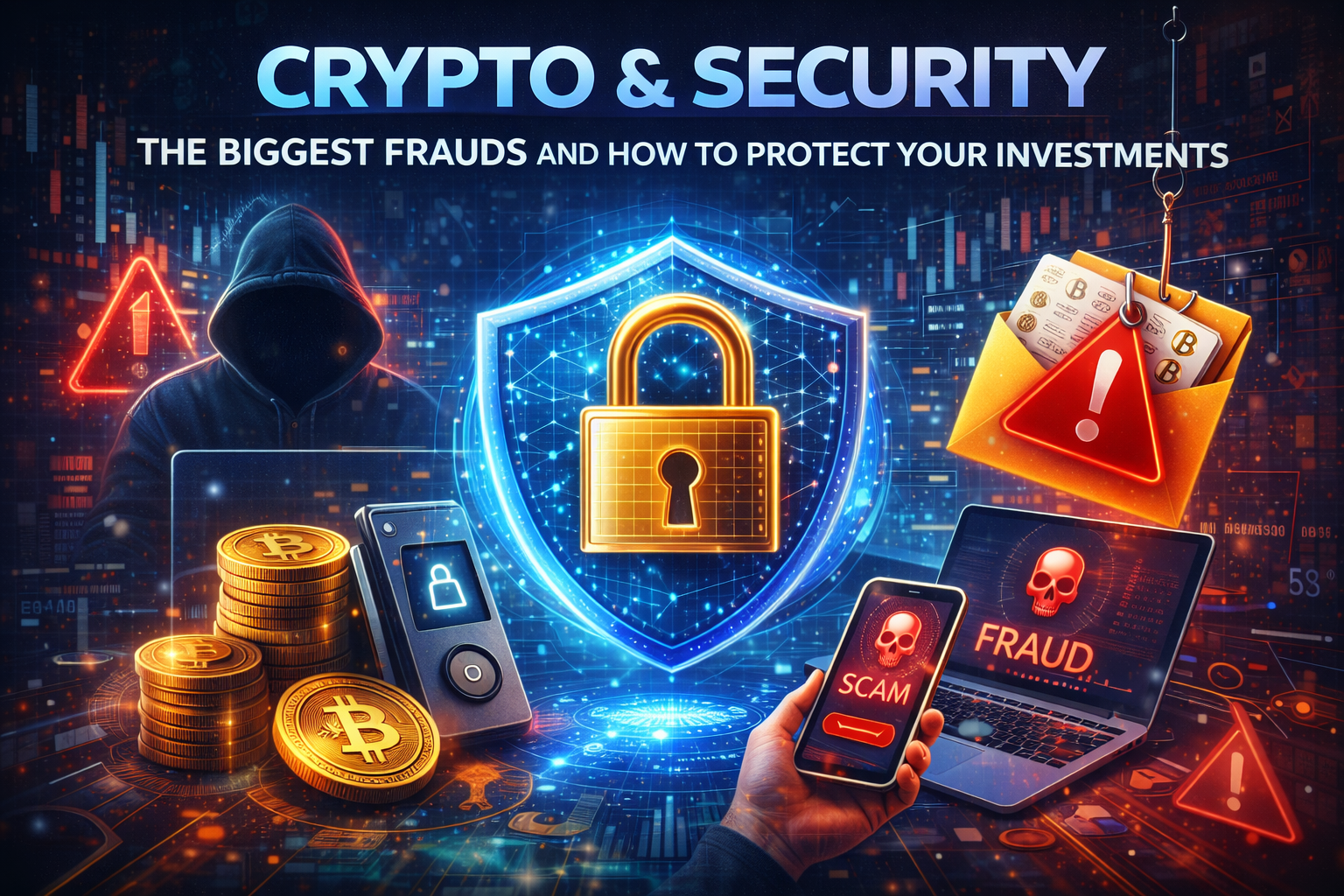
The rapid growth of cryptocurrencies has opened new opportunities for investors, innovators, and businesses around the world. However, alongside this expansion, crypto-related fraud and security threats have also increased. The decentralized and digital nature of blockchain technology, while powerful, has made the crypto space an attractive target for scammers, hackers, and bad actors.
Understanding the most common types of crypto fraud—and learning how to protect your investments—is essential for anyone participating in the digital asset market. Education and vigilance remain the strongest defenses in an industry where users are often responsible for their own security.
Why Crypto Is a Target for Fraud
Cryptocurrencies operate without central authorities, meaning there is no bank or institution to reverse transactions or recover lost funds. While this decentralization offers financial freedom, it also places responsibility directly on users.
Additionally, the relative novelty of crypto, combined with complex technology and rapid innovation, creates an environment where misinformation can thrive. Scammers exploit hype, fear of missing out, and a lack of technical understanding to deceive investors.
Global accessibility and pseudonymity further complicate enforcement, allowing fraudulent actors to operate across borders with minimal oversight.
The Most Common Crypto Frauds
1. Phishing Attacks
Phishing is one of the most widespread forms of crypto fraud. Attackers impersonate legitimate platforms, exchanges, or wallet providers to trick users into revealing private keys, recovery phrases, or login credentials.
These attacks often occur through fake emails, websites, social media messages, or messaging apps. Once attackers gain access to a wallet, funds can be drained instantly and irreversibly.
2. Fake Investment Schemes and Ponzi Projects
Many crypto frauds promise guaranteed or unusually high returns. Ponzi schemes rely on new investor funds to pay earlier participants, creating the illusion of profitability until the system collapses.
These schemes often use professional-looking websites, fabricated testimonials, and aggressive marketing tactics. In crypto, such scams may be disguised as mining programs, staking platforms, or automated trading bots.
3. Rug Pulls in DeFi and NFTs
Rug pulls have become increasingly common in decentralized finance (DeFi) and NFT projects. Developers launch a token or project, attract liquidity and investors, and then abruptly abandon the project after withdrawing the funds.
Because many DeFi platforms are permissionless, malicious actors can create and promote projects quickly. Investors who fail to research the team, code, or token distribution may be particularly vulnerable.
4. Impersonation and Giveaway Scams
Scammers frequently impersonate well-known figures, companies, or crypto influencers on social media. They promote fake giveaways, asking users to send crypto in exchange for a promise of receiving more in return.
Once funds are sent, they are never returned. These scams exploit trust in public figures and the viral nature of social media platforms.
5. Exchange Hacks and Security Breaches
Centralized exchanges have been targets of large-scale hacks, resulting in the loss of millions of dollars worth of crypto. While many exchanges have improved security measures, no platform is entirely immune.
Users who keep large balances on exchanges risk losing funds if the platform is compromised or mismanaged.
Real-World Impact of Crypto Frauds
Crypto fraud has caused billions of dollars in losses globally. Beyond financial damage, scams erode trust in blockchain technology and slow mainstream adoption.
For individual investors, losses can be devastating, especially since crypto transactions are irreversible. These incidents highlight the importance of proactive security practices rather than relying on recovery mechanisms.
How to Protect Your Crypto Investments
1. Use Hardware Wallets
Hardware wallets store private keys offline, making them one of the most secure ways to protect crypto assets. Even if a computer is compromised, funds stored in a hardware wallet remain inaccessible without physical confirmation.
For long-term holdings, cold storage significantly reduces exposure to online threats.
2. Secure Your Recovery Phrase
A wallet’s recovery phrase is the ultimate key to your funds. It should never be stored digitally or shared with anyone. Writing it down and storing it in a secure, private location is essential.
Anyone with access to this phrase can fully control the wallet, regardless of passwords or two-factor authentication.
3. Verify Websites and Links
Always double-check URLs before connecting a wallet or entering credentials. Bookmark official websites and avoid clicking links from unsolicited messages or ads.
Even small differences in spelling can indicate a fake site designed to steal information.
4. Research Projects Thoroughly
Before investing in any crypto project, conduct thorough research. Review the team, whitepaper, tokenomics, and community engagement. Be cautious of anonymous teams with unrealistic promises.
Audits by reputable security firms can provide additional confidence, although they are not guarantees.
5. Avoid “Guaranteed Returns”
In crypto, there are no guaranteed profits. Any project or individual promising risk-free returns should be treated as a red flag. Sustainable investments focus on long-term value creation, not short-term hype.
6. Enable Strong Security Measures
Use strong, unique passwords for exchanges and wallets, and enable two-factor authentication wherever possible. Avoid reusing passwords across platforms.
Consider using dedicated devices for crypto transactions to minimize exposure to malware.
The Role of Education and Awareness
Education remains one of the most effective tools against crypto fraud. Staying informed about common scam tactics and evolving threats helps investors make safer decisions.
Communities, developers, and platforms also play a role by promoting transparency, improving security standards, and reporting suspicious activity. As the industry matures, collaboration between users and infrastructure providers will be essential.
Regulatory Developments and Future Outlook
Governments and regulators are increasingly focusing on crypto security and consumer protection. While regulation cannot eliminate fraud entirely, clear guidelines may reduce the prevalence of large-scale scams and improve accountability.
At the same time, innovation in security technologies—such as multi-signature wallets, decentralized identity, and advanced monitoring tools—offers hope for a safer crypto ecosystem.
Conclusion: Security as a Long-Term Mindset
Crypto offers unprecedented financial freedom, but that freedom comes with responsibility. The biggest threats in the crypto space often stem from human error rather than technological failure.
By understanding common frauds and adopting strong security practices, investors can significantly reduce their risk. In an environment where transactions are irreversible and trust must be earned, caution and education are the foundation of long-term success.
As the crypto industry continues to evolve, security awareness will remain just as important as technological innovation. Protecting your investments is not a one-time task—it is an ongoing commitment.
Deja una respuesta