Categoría: Crypto

  • Crypto and Security: The Biggest Frauds and How to Protect Your Investments

    Crypto and Security: The Biggest Frauds and How to Protect Your Investments

    The rapid growth of cryptocurrencies has opened new opportunities for investors, innovators, and businesses around the world. However, alongside this expansion, crypto-related fraud and security threats have also increased. The decentralized and digital nature of blockchain technology, while powerful, has made the crypto space an attractive target for scammers, hackers, and bad actors.

    Understanding the most common types of crypto fraud—and learning how to protect your investments—is essential for anyone participating in the digital asset market. Education and vigilance remain the strongest defenses in an industry where users are often responsible for their own security.

    Why Crypto Is a Target for Fraud

    Cryptocurrencies operate without central authorities, meaning there is no bank or institution to reverse transactions or recover lost funds. While this decentralization offers financial freedom, it also places responsibility directly on users.

    Additionally, the relative novelty of crypto, combined with complex technology and rapid innovation, creates an environment where misinformation can thrive. Scammers exploit hype, fear of missing out, and a lack of technical understanding to deceive investors.

    Global accessibility and pseudonymity further complicate enforcement, allowing fraudulent actors to operate across borders with minimal oversight.

    The Most Common Crypto Frauds

    1. Phishing Attacks

    Phishing is one of the most widespread forms of crypto fraud. Attackers impersonate legitimate platforms, exchanges, or wallet providers to trick users into revealing private keys, recovery phrases, or login credentials.

    These attacks often occur through fake emails, websites, social media messages, or messaging apps. Once attackers gain access to a wallet, funds can be drained instantly and irreversibly.

    2. Fake Investment Schemes and Ponzi Projects

    Many crypto frauds promise guaranteed or unusually high returns. Ponzi schemes rely on new investor funds to pay earlier participants, creating the illusion of profitability until the system collapses.

    These schemes often use professional-looking websites, fabricated testimonials, and aggressive marketing tactics. In crypto, such scams may be disguised as mining programs, staking platforms, or automated trading bots.

    3. Rug Pulls in DeFi and NFTs

    Rug pulls have become increasingly common in decentralized finance (DeFi) and NFT projects. Developers launch a token or project, attract liquidity and investors, and then abruptly abandon the project after withdrawing the funds.

    Because many DeFi platforms are permissionless, malicious actors can create and promote projects quickly. Investors who fail to research the team, code, or token distribution may be particularly vulnerable.

    4. Impersonation and Giveaway Scams

    Scammers frequently impersonate well-known figures, companies, or crypto influencers on social media. They promote fake giveaways, asking users to send crypto in exchange for a promise of receiving more in return.

    Once funds are sent, they are never returned. These scams exploit trust in public figures and the viral nature of social media platforms.

    5. Exchange Hacks and Security Breaches

    Centralized exchanges have been targets of large-scale hacks, resulting in the loss of millions of dollars worth of crypto. While many exchanges have improved security measures, no platform is entirely immune.

    Users who keep large balances on exchanges risk losing funds if the platform is compromised or mismanaged.

    Real-World Impact of Crypto Frauds

    Crypto fraud has caused billions of dollars in losses globally. Beyond financial damage, scams erode trust in blockchain technology and slow mainstream adoption.

    For individual investors, losses can be devastating, especially since crypto transactions are irreversible. These incidents highlight the importance of proactive security practices rather than relying on recovery mechanisms.

    How to Protect Your Crypto Investments

    1. Use Hardware Wallets

    Hardware wallets store private keys offline, making them one of the most secure ways to protect crypto assets. Even if a computer is compromised, funds stored in a hardware wallet remain inaccessible without physical confirmation.

    For long-term holdings, cold storage significantly reduces exposure to online threats.

    2. Secure Your Recovery Phrase

    A wallet’s recovery phrase is the ultimate key to your funds. It should never be stored digitally or shared with anyone. Writing it down and storing it in a secure, private location is essential.

    Anyone with access to this phrase can fully control the wallet, regardless of passwords or two-factor authentication.

    3. Verify Websites and Links

    Always double-check URLs before connecting a wallet or entering credentials. Bookmark official websites and avoid clicking links from unsolicited messages or ads.

    Even small differences in spelling can indicate a fake site designed to steal information.

    4. Research Projects Thoroughly

    Before investing in any crypto project, conduct thorough research. Review the team, whitepaper, tokenomics, and community engagement. Be cautious of anonymous teams with unrealistic promises.

    Audits by reputable security firms can provide additional confidence, although they are not guarantees.

    5. Avoid “Guaranteed Returns”

    In crypto, there are no guaranteed profits. Any project or individual promising risk-free returns should be treated as a red flag. Sustainable investments focus on long-term value creation, not short-term hype.

    6. Enable Strong Security Measures

    Use strong, unique passwords for exchanges and wallets, and enable two-factor authentication wherever possible. Avoid reusing passwords across platforms.

    Consider using dedicated devices for crypto transactions to minimize exposure to malware.

    The Role of Education and Awareness

    Education remains one of the most effective tools against crypto fraud. Staying informed about common scam tactics and evolving threats helps investors make safer decisions.

    Communities, developers, and platforms also play a role by promoting transparency, improving security standards, and reporting suspicious activity. As the industry matures, collaboration between users and infrastructure providers will be essential.

    Regulatory Developments and Future Outlook

    Governments and regulators are increasingly focusing on crypto security and consumer protection. While regulation cannot eliminate fraud entirely, clear guidelines may reduce the prevalence of large-scale scams and improve accountability.

    At the same time, innovation in security technologies—such as multi-signature wallets, decentralized identity, and advanced monitoring tools—offers hope for a safer crypto ecosystem.

    Conclusion: Security as a Long-Term Mindset

    Crypto offers unprecedented financial freedom, but that freedom comes with responsibility. The biggest threats in the crypto space often stem from human error rather than technological failure.

    By understanding common frauds and adopting strong security practices, investors can significantly reduce their risk. In an environment where transactions are irreversible and trust must be earned, caution and education are the foundation of long-term success.

    As the crypto industry continues to evolve, security awareness will remain just as important as technological innovation. Protecting your investments is not a one-time task—it is an ongoing commitment.
  • Stablecoins on the Rise: How USDT and USDC Are Transforming Digital Payments

    Stablecoins on the Rise: How USDT and USDC Are Transforming Digital Payments

    The rapid expansion of stablecoins has become one of the most significant developments in the cryptocurrency ecosystem. Designed to maintain a stable value by being pegged to fiat currencies, stablecoins bridge the gap between traditional finance and blockchain technology. Among them, Tether (USDT) and USD Coin (USDC) have emerged as dominant forces, reshaping how individuals, businesses, and institutions approach digital payments.

    As digital economies grow and demand for faster, cheaper, and more accessible payment systems increases, USDT and USDC are playing a crucial role in redefining global financial transactions.

    What Are Stablecoins and Why Do They Matter?

    Stablecoins are cryptocurrencies whose value is typically pegged to a stable asset, most commonly the US dollar. Unlike volatile cryptocurrencies such as Bitcoin or Ethereum, stablecoins aim to maintain price stability, making them suitable for everyday transactions, remittances, and savings.

    This stability addresses one of the main barriers to crypto adoption: price fluctuations. By offering the benefits of blockchain—such as transparency, speed, and borderless transfer—without extreme volatility, stablecoins have become an essential tool for users seeking reliability in digital finance.

    USDT and USDC dominate this market, accounting for a substantial portion of global crypto trading volume and digital payment activity.

    USDT: Liquidity and Global Reach

    Tether (USDT) is the most widely used stablecoin in the world. Its primary strength lies in liquidity and global accessibility. USDT is available on multiple blockchains, including Ethereum, Tron, Solana, and others, allowing users to choose networks based on speed and transaction costs.

    In many regions with limited access to traditional banking, USDT functions as a digital dollar. Individuals use it to preserve value, conduct cross-border payments, and participate in global markets without relying on local financial infrastructure.

    USDT’s extensive adoption on crypto exchanges also makes it a cornerstone of digital trading. Many traders use it as a base pair, enabling seamless movement between assets without converting back to fiat currencies.

    USDC: Transparency and Institutional Trust

    USD Coin (USDC) has positioned itself as a more regulated and transparent alternative. Issued by a consortium with strong ties to traditional finance, USDC emphasizes regular audits and compliance with financial standards.

    This approach has made USDC particularly attractive to institutions, fintech companies, and enterprises seeking regulatory clarity. As digital payments increasingly intersect with traditional financial systems, trust and transparency become critical factors.

    USDC’s integration into payment platforms, decentralized finance applications, and enterprise solutions highlights its growing role as a digital settlement layer for businesses.

    Redefining Cross-Border Payments

    One of the most transformative impacts of USDT and USDC is in cross-border payments. Traditional international transfers are often slow, expensive, and dependent on intermediaries. Stablecoins enable near-instant transfers across borders at a fraction of the cost.

    For migrant workers sending remittances or businesses operating globally, stablecoins reduce friction and eliminate reliance on legacy systems. Transactions can be settled within minutes, regardless of geographic location or banking hours.

    This efficiency has the potential to disrupt traditional remittance services and international payment networks, particularly in emerging markets.

    Stablecoins and the Growth of Digital Commerce

    As e-commerce expands globally, the need for efficient digital payment solutions grows. Stablecoins offer merchants an alternative to credit cards and traditional payment processors, reducing fees and settlement times.

    By accepting USDT or USDC, businesses can access a global customer base without worrying about currency conversion or chargebacks. For consumers, stablecoins provide a fast and transparent way to pay online without exposing sensitive banking information.

    This growing use of stablecoins in digital commerce may contribute to broader crypto adoption among mainstream users.

    Integration with DeFi and Financial Innovation

    Stablecoins are the backbone of decentralized finance (DeFi). Lending, borrowing, yield farming, and automated trading all rely heavily on stable assets to function efficiently.

    USDT and USDC serve as primary sources of liquidity in DeFi protocols, enabling users to earn interest, hedge risk, and access financial services without intermediaries. As DeFi matures, stablecoins are expected to become even more integrated into on-chain financial systems.

    Beyond DeFi, stablecoins are increasingly used in payroll systems, on-chain savings products, and tokenized asset markets, expanding their influence across the financial landscape.

    Regulatory Developments and Challenges

    As stablecoins grow in importance, regulatory scrutiny has intensified. Governments and financial authorities are evaluating how stablecoins fit into existing legal frameworks, particularly concerning consumer protection, reserve management, and financial stability.

    USDC’s compliance-focused model aligns closely with regulatory expectations, potentially giving it an advantage in jurisdictions seeking clear oversight. USDT, while widely adopted, faces ongoing discussions around transparency and regulatory alignment.

    Clear and balanced regulation could legitimize stablecoins further, encouraging institutional participation while protecting users. However, overly restrictive policies may limit innovation and access, especially in regions that benefit most from decentralized financial tools.

    Competition with Central Bank Digital Currencies

    Stablecoins also compete with central bank digital currencies (CBDCs), which aim to digitize national currencies. While CBDCs offer government-backed stability, they may lack the openness and interoperability of blockchain-based stablecoins.

    USDT and USDC operate across multiple networks and platforms, enabling seamless integration into global crypto ecosystems. This flexibility gives them an edge in decentralized applications and international markets.

    The coexistence of stablecoins and CBDCs could shape the future of digital money, with each serving different use cases and user preferences.

    The Future of Stablecoins in Digital Payments

    Looking ahead, stablecoins are likely to become an integral part of the global payment infrastructure. As blockchain scalability improves and user experience becomes more intuitive, USDT and USDC may be used as easily as traditional digital wallets.

    Their role in financial inclusion, particularly in underbanked regions, cannot be overstated. By providing access to a stable digital currency, stablecoins empower individuals to participate in the global economy without relying on traditional banks.

    Conclusion: A New Era of Digital Payments

    The expansion of stablecoins marks a turning point in the evolution of digital finance. USDT and USDC are not merely trading tools; they are reshaping how value moves across the world.

    By combining price stability with blockchain efficiency, these stablecoins are redefining payments, enabling financial innovation, and challenging traditional systems. While regulatory and technical challenges remain, the growing adoption of USDT and USDC suggests that stablecoins will play a central role in the future of money.

    As digital payments continue to evolve, stablecoins stand at the forefront of a more open, efficient, and inclusive financial system.

  • Top 5 Altcoins With the Highest Growth Potential This Year

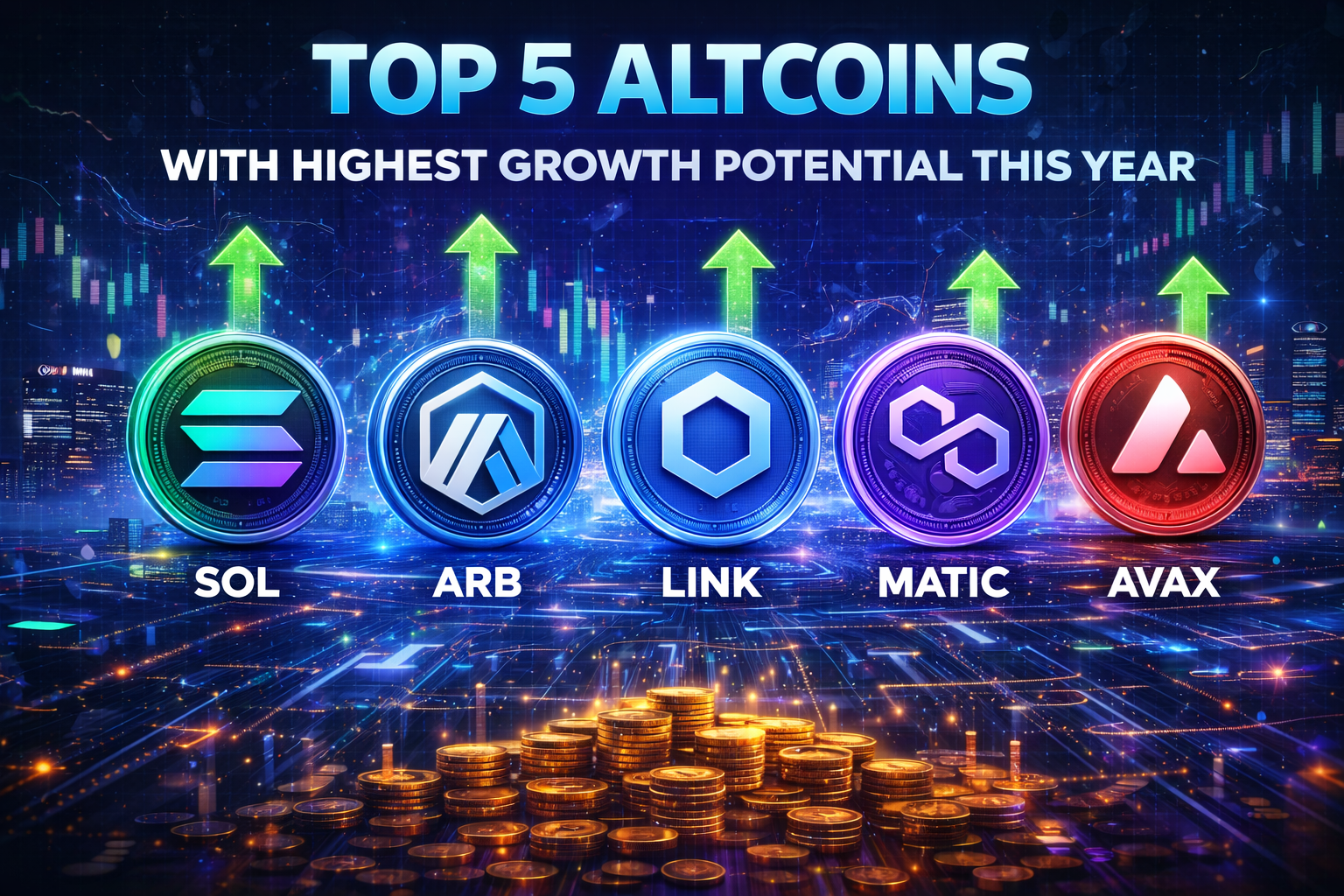
    Top 5 Altcoins With the Highest Growth Potential This Year

    As the cryptocurrency market continues to evolve, investors are increasingly looking beyond Bitcoin and Ethereum in search of higher growth opportunities. Altcoins—alternative cryptocurrencies to Bitcoin—often offer innovative technologies, niche use cases, and, in some cases, stronger upside potential during favorable market conditions. While higher returns usually come with higher risk, identifying projects with strong fundamentals can significantly improve long-term outcomes.

    This year presents a unique environment shaped by technological advancements, growing institutional interest, and increasing real-world adoption of blockchain solutions. Below are five altcoins that stand out due to their technology, ecosystem growth, and market positioning. While no investment is guaranteed, these projects are widely regarded as having strong potential for growth.

    1. Solana (SOL): High-Performance Blockchain Infrastructure

    Solana has positioned itself as one of the leading high-performance blockchain platforms in the market. Known for its fast transaction speeds and low fees, Solana was designed to support large-scale decentralized applications without relying heavily on Layer 2 solutions.

    One of Solana’s main strengths is its ability to process thousands of transactions per second while maintaining relatively low costs. This makes it particularly attractive for applications such as decentralized exchanges, NFT marketplaces, and blockchain-based games. Developers are drawn to Solana’s growing ecosystem, which continues to expand despite periods of network challenges in the past.

    This year, improvements in network stability, tooling, and validator diversity are strengthening confidence in the platform. If adoption continues and the ecosystem matures, Solana could solidify its position as a core competitor to Ethereum in the smart contract space.

    2. Arbitrum (ARB): Scaling Ethereum for Mass Adoption

    Arbitrum is a leading Layer 2 scaling solution built on Ethereum. Rather than competing directly with Ethereum, it enhances Ethereum’s capabilities by offering faster transactions and significantly lower fees while inheriting Ethereum’s security.

    The rise of Layer 2 solutions has become one of the most important trends in crypto, and Arbitrum is at the forefront of this movement. Many decentralized finance protocols have migrated or expanded to Arbitrum, attracted by reduced costs and improved user experience.

    This year, continued Ethereum upgrades and increasing demand for scalable infrastructure could drive further growth for Arbitrum. As more users interact with decentralized applications without realizing they are using a Layer 2, Arbitrum’s role in the broader ecosystem may become increasingly critical.

    3. Chainlink (LINK): The Backbone of Blockchain Data

    Chainlink plays a unique and essential role in the crypto ecosystem by providing decentralized oracles. Oracles allow smart contracts to securely access off-chain data, such as price feeds, interest rates, and real-world events. Without reliable data inputs, many blockchain applications would simply not function.

    Chainlink’s technology is widely adopted across decentralized finance, gaming, insurance, and enterprise blockchain solutions. Its expanding suite of services—including cross-chain interoperability and advanced data solutions—positions it as a foundational layer rather than a speculative application.

    This year, the continued growth of real-world asset tokenization and institutional blockchain adoption could significantly increase demand for Chainlink’s services. As smart contracts become more integrated with traditional systems, Chainlink’s relevance and potential value may continue to rise.

    4. Polygon (MATIC): Connecting Blockchains at Scale

    Polygon has evolved from a simple scaling solution into a comprehensive blockchain interoperability platform. It offers a suite of tools that enable developers to build scalable, Ethereum-compatible blockchains with ease.

    One of Polygon’s major advantages is its strong focus on enterprise adoption. Numerous global brands and institutions have explored or launched blockchain initiatives using Polygon’s infrastructure. This real-world engagement provides credibility and long-term growth potential.

    This year, Polygon’s continued development of zero-knowledge technologies and modular blockchain solutions could further strengthen its ecosystem. By addressing scalability, interoperability, and sustainability, Polygon aims to position itself as a key bridge between Web2 and Web3 applications.

    5. Avalanche (AVAX): Customizable Blockchain Networks

    Avalanche stands out due to its unique approach to blockchain architecture. Instead of a single chain handling all activity, Avalanche allows developers to create customized blockchains—known as subnets—tailored to specific use cases.

    This flexibility makes Avalanche attractive for institutions, gaming platforms, and enterprises that require specific compliance or performance features. Avalanche also offers fast finality and low transaction costs, making it competitive with other Layer 1 platforms.

    This year, increased adoption of subnets and continued partnerships could drive growth for the Avalanche ecosystem. As blockchain use cases diversify, platforms that offer customization without sacrificing security may gain a significant advantage.

    Key Factors Driving Altcoin Growth This Year

    Several broader trends are shaping the potential growth of altcoins this year. First, scalability solutions are becoming essential as user activity increases. Projects that improve speed, reduce costs, and enhance usability are likely to attract both developers and users.

    Second, institutional involvement is increasing. From tokenized assets to blockchain-based settlement systems, institutions are seeking reliable, scalable networks. Altcoins with strong security models and regulatory awareness may benefit disproportionately from this trend.

    Finally, developer activity remains one of the most important indicators of long-term success. Ecosystems that continue to attract builders are more likely to produce innovative applications that drive sustained demand for their native tokens.

    Risks and Considerations

    While these altcoins show strong potential, investors should remain aware of the risks. Market volatility, regulatory uncertainty, and technological challenges can impact prices significantly. Additionally, competition within the crypto space is intense, and today’s leading projects must continue to innovate to maintain relevance.

    Diversification, risk management, and ongoing research are essential when investing in altcoins. Rather than focusing solely on short-term price movements, understanding a project’s long-term vision and execution capability can lead to more informed decisions.

    Conclusion: Opportunity Through Innovation

    Altcoins continue to represent some of the most dynamic opportunities in the cryptocurrency market. The five projects highlighted—Solana, Arbitrum, Chainlink, Polygon, and Avalanche—each address critical challenges within the blockchain ecosystem and offer unique value propositions.

    While no investment is without risk, these altcoins stand out due to their technology, adoption potential, and strategic positioning. As the crypto market evolves throughout the year, innovation and real-world utility are likely to be the primary drivers of sustainable growth.

    For investors willing to navigate volatility and focus on fundamentals, this year could offer meaningful opportunities beyond the most established cryptocurrencies.

  • Ethereum 2026: Updates That Could Change the Crypto Market

    Ethereum 2026: Updates That Could Change the Crypto Market

    As the cryptocurrency ecosystem continues to mature, Ethereum remains at the center of innovation. By 2026, Ethereum is expected to undergo several critical upgrades and structural evolutions that could redefine not only its own network, but also the broader crypto market. From scalability improvements and enhanced security to economic changes that affect supply and demand, Ethereum’s roadmap has the potential to reshape decentralized finance, NFTs, enterprise adoption, and the competitive balance among blockchains.

    Understanding these upcoming developments is essential for investors, developers, and institutions seeking to anticipate where the crypto market may be heading over the next few years.

    Ethereum’s Evolution: From Smart Contracts to Global Infrastructure

    Ethereum was launched as a programmable blockchain designed to extend beyond simple peer-to-peer transactions. Over time, it became the foundation for decentralized applications, DeFi protocols, NFTs, and DAO governance. However, rapid growth exposed fundamental limitations, including high transaction fees, network congestion, and energy inefficiency.

    The transition to Proof of Stake (PoS) marked a turning point, drastically reducing energy consumption and laying the groundwork for future scalability upgrades. By 2026, Ethereum is expected to move closer to its long-term vision: a highly scalable, secure, and decentralized settlement layer for the global digital economy.

    Scalability Upgrades: The Role of Danksharding and Rollups

    One of the most significant changes expected by 2026 is the full implementation of advanced sharding techniques, often referred to as Danksharding. This upgrade is designed to dramatically increase Ethereum’s data availability, enabling Layer 2 rollups to process far more transactions at lower costs.

    Rather than scaling Ethereum directly at the base layer, the network increasingly relies on rollups—such as optimistic and zero-knowledge rollups—to handle execution. Ethereum itself focuses on consensus, security, and data availability. By 2026, this rollup-centric roadmap could allow Ethereum to support tens of thousands of transactions per second without sacrificing decentralization.

    Lower fees and faster confirmation times would significantly improve user experience, opening the door to mainstream applications such as gaming, micro-payments, decentralized social media, and real-time financial services.

    Account Abstraction: Improving User Experience

    Another major update that could reshape Ethereum’s adoption is account abstraction. Traditionally, Ethereum accounts are controlled by private keys, which creates usability and security challenges for everyday users. Account abstraction introduces smart contract-based wallets that allow for features such as social recovery, gas fee sponsorship, and batch transactions.

    By 2026, widespread adoption of account abstraction could eliminate many of the barriers that prevent non-technical users from interacting with blockchain applications. This improvement may be especially impactful for enterprises and institutions seeking user-friendly onboarding solutions.

    A more intuitive Ethereum experience could accelerate mass adoption and reduce the friction that has historically limited crypto’s reach beyond early adopters.

    Ethereum’s Monetary Policy and Supply Dynamics

    Ethereum’s economic model has evolved significantly since the introduction of fee burning mechanisms. A portion of transaction fees is permanently removed from circulation, creating deflationary pressure during periods of high network activity.

    As Ethereum scales and usage increases, this deflationary dynamic may become more pronounced by 2026. Combined with staking, which locks up a significant portion of ETH supply, the result could be reduced liquid supply and increased scarcity.

    This evolving monetary policy differentiates Ethereum from many other blockchains and positions ETH as both a utility asset and a potential store of value. Market participants often compare Ethereum’s supply mechanics to a digital bond or yield-bearing asset, particularly as staking rewards become more predictable.

    Security Enhancements and Network Resilience

    Security remains a cornerstone of Ethereum’s roadmap. By 2026, improvements in validator architecture, slashing mechanisms, and client diversity are expected to strengthen the network against attacks and technical failures.

    Greater decentralization of validators and improved tooling for node operators could reduce systemic risk. Additionally, advancements in cryptography, such as more efficient zero-knowledge proofs, may further enhance privacy and security without compromising transparency.

    A more resilient Ethereum network would increase confidence among institutions, governments, and enterprises considering blockchain integration for mission-critical applications.

    Impact on DeFi and Institutional Adoption

    Ethereum remains the dominant platform for decentralized finance, hosting the majority of DeFi liquidity and innovation. By 2026, lower fees and higher throughput could revitalize DeFi by making complex financial operations accessible to a global audience.

    Institutional adoption is also expected to grow. Tokenized real-world assets, on-chain settlement systems, and decentralized identity solutions are likely to rely heavily on Ethereum’s infrastructure. Regulatory clarity in major jurisdictions could further accelerate this trend, positioning Ethereum as a compliant and trusted platform for financial innovation.

    If Ethereum successfully balances decentralization with regulatory compatibility, it may become the backbone of hybrid financial systems that bridge traditional finance and blockchain technology.

    Competition and Market Position in 2026

    While Ethereum continues to lead, competition from alternative Layer 1 blockchains remains intense. Networks offering high throughput and low fees aim to attract developers and users away from Ethereum.

    However, Ethereum’s advantage lies in its robust ecosystem, developer community, and security track record. By focusing on modular scalability and long-term sustainability rather than short-term performance, Ethereum may retain its dominance while allowing specialized Layer 2 solutions to flourish.

    By 2026, the market may shift from a “winner-takes-all” narrative to a multi-chain environment where Ethereum serves as the primary settlement layer.

    Conclusion: A Pivotal Year Ahead

    Ethereum in 2026 represents more than a series of technical upgrades—it reflects a strategic evolution toward becoming a foundational layer for the digital economy. Scalability improvements, enhanced usability, evolving token economics, and stronger security could significantly influence the trajectory of the crypto market.

    While challenges remain, Ethereum’s roadmap suggests a future where blockchain technology becomes more accessible, efficient, and integrated into everyday life. For investors and developers alike, understanding these updates is critical to navigating the next phase of crypto adoption.

    If Ethereum delivers on its promises, 2026 may be remembered as a turning point that reshaped not only Ethereum itself, but the entire cryptocurrency landscape.

  • Bitcoin Breaks Key Resistance: Is It Time to Buy or Sell?

    Bitcoin Breaks Key Resistance: Is It Time to Buy or Sell?

    Bitcoin has once again captured the attention of global financial markets after breaking through a key resistance level that had held prices down for weeks, and in some cases months. This technical breakout has reignited discussions among traders, long-term investors, and analysts alike: is now the right moment to buy Bitcoin, or does this surge signal an opportunity to sell before a potential pullback?

    To answer this question, it is essential to analyze the situation from multiple angles, including technical analysis, market sentiment, macroeconomic conditions, and historical precedents. Bitcoin’s price movements are rarely driven by a single factor, and understanding the broader context can help investors make more informed decisions.

    Understanding the Importance of a Resistance Break

    In technical analysis, a resistance level represents a price point at which selling pressure historically outweighs buying interest. When Bitcoin approaches this level, many traders take profits or open short positions, preventing further upward movement. A successful breakout above resistance suggests that demand has become strong enough to absorb selling pressure, often signaling a potential trend continuation.

    Bitcoin’s recent breakout is particularly notable because it occurred at a level that had previously rejected price multiple times. This kind of resistance is often considered “psychologically significant,” as traders remember past failures and place their strategies around the same price zone. When Bitcoin finally moves above it with strong volume, it can trigger a cascade of buy orders, including stop-losses from short sellers and momentum-based entries from algorithmic traders.

    However, a breakout alone does not guarantee sustained upside. False breakouts, also known as “bull traps,” are common in volatile markets like cryptocurrencies. Therefore, confirmation through follow-up price action and volume remains critical.

    Technical Indicators: What Are They Telling Us?

    Several technical indicators provide insight into whether Bitcoin’s move is supported by underlying strength. Momentum indicators such as the Relative Strength Index (RSI) often rise during breakouts, signaling increased buying pressure. If RSI remains below extreme overbought levels, it may suggest that there is still room for further upside.

    Moving averages also play a crucial role. When Bitcoin trades above key moving averages such as the 50-day and 200-day averages, it often indicates a bullish market structure. In some cases, a breakout above resistance coincides with a “golden cross,” where a shorter-term moving average crosses above a longer-term one, reinforcing bullish sentiment.

    Volume is another essential factor. A breakout accompanied by rising volume is generally seen as more reliable than one occurring on weak trading activity. High volume suggests broad market participation, reducing the likelihood that the move is driven by a small group of speculative traders.

    Market Sentiment and On-Chain Data

    Beyond price charts, market sentiment provides valuable clues. When Bitcoin breaks resistance, social media engagement, search interest, and news coverage tend to increase. While growing attention can attract new buyers, it can also signal overheating if optimism becomes excessive.

    On-chain metrics help balance this perspective. Data such as the number of active addresses, transaction volume, and long-term holder behavior can reveal whether the rally is supported by genuine network usage. If long-term holders are not aggressively selling into the breakout, it may indicate confidence in higher prices ahead.

    Additionally, exchange flows are closely watched. A decrease in Bitcoin balances held on exchanges often suggests that investors are moving assets into cold storage, reducing immediate selling pressure. Conversely, rising exchange inflows may indicate preparation for profit-taking.

    Macroeconomic Factors at Play

    Bitcoin does not operate in isolation from the global economy. Interest rates, inflation expectations, and monetary policy decisions significantly influence risk assets. In periods of loose monetary policy or declining interest rates, Bitcoin often benefits as investors seek alternatives to traditional financial instruments.

    Institutional adoption has also become a key driver in recent years. The approval of Bitcoin-related financial products, increased corporate treasury allocations, or favorable regulatory developments can provide strong tailwinds. If Bitcoin’s breakout aligns with supportive macroeconomic news, the move may have a higher probability of continuation.

    On the other hand, sudden macro shocks—such as unexpected rate hikes, regulatory crackdowns, or geopolitical tensions—can quickly reverse market momentum. Investors must remain aware that Bitcoin’s volatility amplifies both positive and negative external influences.

    Is It Time to Buy?

    For bullish investors, a confirmed resistance breakout can represent an attractive buying opportunity, particularly if Bitcoin establishes the former resistance as new support. This “support flip” is a classic technical signal that often precedes sustained upward trends.

    Long-term investors who believe in Bitcoin’s role as a digital store of value may view short-term volatility as less relevant. From this perspective, breakouts reinforce the broader adoption narrative rather than dictate precise entry or exit points.

    However, risk management remains essential. Buying after a sharp move carries the risk of short-term pullbacks. Many traders prefer to wait for a retest of the breakout level before entering, reducing the chance of chasing price at local highs.

    Or Is It Time to Sell?

    For those who bought Bitcoin at lower levels, a resistance breakout can be an opportunity to take partial profits. Selling a portion of holdings allows investors to lock in gains while maintaining exposure in case the rally continues.

    Short-term traders may also consider selling if technical indicators show signs of exhaustion, such as bearish divergences or rapidly declining volume after the initial breakout. In highly speculative markets, sharp rallies are often followed by corrections, even within broader uptrends.

    Importantly, selling does not necessarily mean exiting the market entirely. Strategic profit-taking and re-entry at lower levels can be part of a disciplined trading approach.

    Conclusion: A Decision Depends on Strategy

    Bitcoin’s break above a key resistance level is undoubtedly a significant technical event, signaling renewed strength and market confidence. However, whether it is time to buy or sell depends largely on an investor’s time horizon, risk tolerance, and overall strategy.

    Long-term believers may see this breakout as another step in Bitcoin’s maturation, while short-term traders will focus on confirmation, volume, and momentum signals. As always, no single indicator provides all the answers. Combining technical analysis, on-chain data, and macroeconomic awareness offers the most balanced perspective.

    In a market as dynamic as Bitcoin, flexibility and discipline are often more valuable than attempting to predict every price movement. The breakout may mark the beginning of a new trend—or simply another chapter in Bitcoin’s ongoing volatility. Either way, informed decision-making remains the key to navigating the opportunity.