Categoría: Investments

  • Venture Capital in Blockchain: Crypto Startups That Are Revolutionizing the Market

    Venture Capital in Blockchain: Crypto Startups That Are Revolutionizing the Market

    Venture capital (VC) has long been the lifeblood of innovation in technology. From early bets on software platforms to financing biotech breakthroughs, venture firms have played a pivotal role in shaping the digital economy. In recent years, a new frontier has emerged on the horizon of global finance and technology: blockchain and cryptocurrency. What started as a niche interest among technologists and libertarians has evolved into a vibrant and rapidly expanding ecosystem — one that is attracting serious capital from some of the world’s most influential investors.

    Today, blockchain technology and crypto startups are at the forefront of innovation. They are not only transforming how value is transferred and stored, but also redefining concepts of decentralization, trust, governance, and financial inclusion. Venture capital is not just participating in this revolution — it is a driving force accelerating it.


    Why Blockchain Attracts Venture Capital

    There are several reasons why venture capitalists are pouring billions of dollars into blockchain and crypto startups:

    1. High Growth Potential

    Blockchain technology has applications far beyond cryptocurrencies. It promises to overhaul industries like finance, supply chain, healthcare, real estate, gaming, and digital identity. This breadth of potential use cases creates a huge opportunity for startups that can deliver scalable solutions.

    2. Decentralization as a Paradigm Shift

    Traditional platforms depend on centralized authorities — banks, governments, corporations — to manage data and transactions. Blockchain upends this model by enabling decentralized networks where trust is established through code, cryptography, and consensus. This fundamental shift appeals to investors seeking disruptive technologies.

    3. Tokenization and New Business Models

    Blockchain enables the creation of tokens — digital assets that can represent ownership, rights, or value within an ecosystem. Token economies provide new ways for startups to bootstrap communities, align incentives, and generate liquidity.

    4. Global Reach and Financial Inclusion

    Crypto and decentralized finance (DeFi) protocols allow anyone with an internet connection to access financial services, bypassing barriers such as banking infrastructure or restrictive regulations. Investors see this as not only an ethical win but also a valuation opportunity in emerging markets.


    Key Areas Where Crypto Startups Are Revolutionizing the Market

    Venture capital funding in blockchain is not monolithic. It’s flowing into multiple sub-sectors, each with unique value propositions. The most impactful areas include:


    1. Decentralized Finance (DeFi)

    DeFi refers to financial services built on blockchain networks that operate without traditional intermediaries like banks or brokerages. These platforms allow users to lend, borrow, trade, and earn yields on their assets using smart contracts.

    Examples of Innovation in DeFi:

    • Decentralized exchanges (DEXs) that facilitate peer-to-peer trading.
    • Automated market makers (AMMs) that provide liquidity through smart contracts.
    • Yield farming and liquidity mining that reward users for contributing capital.

    DeFi’s explosive growth has attracted venture funding from firms that see it as a step toward a more inclusive and efficient financial system.


    2. Web3 and Decentralized Applications (dApps)

    Web3 represents the next iteration of the internet — one that is decentralized, user-controlled, and powered by blockchain. Startups in this space are reinventing digital ownership and digital experiences.

    Startup Contributions:

    • Social networks that reward users for content creation.
    • Marketplaces for non-fungible tokens (NFTs), which represent unique digital assets.
    • Gaming platforms where in-game assets are truly owned and tradable by players.

    These innovations are reshaping digital culture and consumer engagement in ways that challenge centralized tech giants.


    3. Infrastructure Protocols

    Behind every successful blockchain application lies robust infrastructure. Venture capitalists are backing projects that provide the foundational layers for blockchain ecosystems.

    Examples:

    • Layer 1 blockchains that operate as independent networks (e.g., smart contract platforms).
    • Layer 2 scaling solutions that increase transaction throughput and reduce costs.
    • Cross-chain protocols that allow different blockchains to communicate and transfer value.

    Infrastructure startups may not always be in the spotlight, but they are essential to the long-term scalability and sustainability of decentralized systems.


    4. Enterprise Blockchain Solutions

    Beyond public blockchains and crypto-native ventures, there’s growing demand from traditional industries for blockchain-based solutions. Corporations are exploring ways to streamline processes, enhance transparency, and reduce costs.

    Enterprise Use Cases:

    • Supply chain tracking for origin verification and quality assurance.
    • Tokenized securities and digital asset custody solutions.
    • Identity and credential verification systems.

    Startups with B2B blockchain solutions are attracting interest from both corporate partners and VC funds looking for real-world adoption.


    Notable Crypto Startups Backed by Venture Capital

    While the crypto landscape evolves rapidly, several startups stand out for their innovation, strong communities, and successful capital raises:

    1. Innovative DeFi Platforms

    DeFi protocols that offer lending, borrowing, and decentralized exchange services have become staples of the crypto economy. Backed by prominent VC firms, these platforms often pioneer new financial primitives and incentive mechanisms.

    2. Layer 1 and Layer 2 Networks

    Emerging blockchains that provide alternatives to legacy networks are gaining traction. With venture funding, these projects invest heavily in developer ecosystems, security audits, and community incentives to drive adoption.

    3. Web3 Infrastructure Projects

    Startups building cutting-edge tools for developers and users — including decentralized storage, identity solutions, and data oracles — are redefining how applications interact with blockchain networks.

    4. NFT and Metaverse Innovators

    By merging digital ownership with immersive experiences, NFT platforms and metaverse projects are attracting big-ticket investments. These startups are not only creating new cultural economies but also experimenting with monetization models that reward engagement and creativity.


    Challenges Facing Venture Capital in Blockchain

    Despite the promise, investing in blockchain startups carries distinct challenges:

    1. Regulatory Uncertainty

    Regulation varies widely across jurisdictions, and evolving legal frameworks can introduce risk for both startups and investors. This makes due diligence and compliance essential components of any VC strategy.

    2. Market Volatility

    Cryptocurrency prices are notoriously volatile. This can affect startup valuations, user behavior, and funding cycles, making long-term forecasting difficult.

    3. Security Risks

    Blockchain applications, particularly smart contracts, are susceptible to bugs and exploits. Security failures can erode trust and result in significant financial losses.

    4. Talent Competition

    Top developers in blockchain are in high demand. Securing skilled teams often requires attractive compensation packages and equity participation, increasing startup burn rates.


    The Future of Blockchain and Venture Capital

    Despite the challenges, the relationship between venture capital and blockchain innovation is poised to grow stronger. As institutional investors mature in their understanding of digital assets and decentralized systems, the quantum of capital flowing into this space is likely to increase.

    Key trends that may shape the future include:

    • Institutional adoption of DeFi and tokenized assets.
    • More robust and compliant infrastructure for enterprise use.
    • Blockchain integration with emerging technologies like AI and IoT.
    • Greater participation from global markets and underrepresented regions.

    Blockchain technology may still be in its early stages, but its impact on global finance, digital ownership, and economic structures is already profound. With the support of venture capital, the next generation of crypto startups will continue to push boundaries, uncover new opportunities, and redefine what’s possible in the digital age.

  • How to Invest in Stocks and Crypto at the Same Time: Hybrid Portfolio Strategies

    How to Invest in Stocks and Crypto at the Same Time: Hybrid Portfolio Strategies

    The investment landscape has changed dramatically over the past decade. Investors are no longer limited to choosing between traditional assets like stocks and bonds or emerging assets like cryptocurrencies. Today, it is increasingly common to combine both worlds into a single investment strategy. Hybrid portfolios—those that include both stocks and crypto—offer unique opportunities for growth, diversification, and risk management when structured correctly.

    Understanding how to balance these asset classes is essential for investors looking to benefit from innovation without sacrificing stability.

    Why Combine Stocks and Crypto?

    Stocks and cryptocurrencies represent two fundamentally different investment ecosystems. Stocks are tied to company performance, earnings, and macroeconomic conditions, while cryptocurrencies are driven by technological adoption, network effects, and decentralized innovation.

    Combining the two allows investors to gain exposure to both established economic systems and emerging digital infrastructure. Stocks provide long-term stability and income potential, while crypto offers high-growth opportunities and access to transformative technology.

    In a world shaped by rapid technological change, hybrid portfolios reflect a more complete view of modern finance.

    Understanding the Risk Profiles

    Before building a hybrid portfolio, it is crucial to understand the risk characteristics of each asset class.

    Stocks, particularly blue-chip equities and diversified index funds, tend to exhibit moderate volatility and predictable long-term growth. While market downturns can impact stock prices, historical data shows that equities often recover over time.

    Cryptocurrencies, on the other hand, are significantly more volatile. Prices can rise or fall sharply in short periods due to regulatory news, technological developments, or shifts in market sentiment. However, this volatility also creates opportunities for outsized returns.

    A successful hybrid strategy balances these contrasting risk profiles to achieve sustainable growth.

    Determining Asset Allocation

    Asset allocation is the foundation of any hybrid portfolio. The ideal mix of stocks and crypto depends on factors such as age, financial goals, investment horizon, and risk tolerance.

    Conservative investors may allocate a small percentage to crypto—perhaps 5 to 10 percent—while focusing primarily on stocks and other traditional assets. More aggressive investors with longer time horizons may allocate 20 percent or more to crypto, seeking higher growth potential.

    The key is to ensure that no single asset class dominates the portfolio to the point of jeopardizing overall financial stability.

    Choosing the Right Stocks

    In a hybrid portfolio, stocks often serve as the stabilizing force. Diversification across sectors and regions is essential.

    Index funds and exchange-traded funds (ETFs) provide broad market exposure and reduce company-specific risk. Investors may also include individual stocks in sectors aligned with long-term trends, such as technology, healthcare, renewable energy, and artificial intelligence.

    Dividend-paying stocks can add an income component, helping to offset crypto’s volatility and provide consistent cash flow.

    Selecting Cryptocurrencies Wisely

    Crypto selection requires careful research. While thousands of cryptocurrencies exist, only a small number have demonstrated long-term viability.

    Bitcoin is often considered the foundation of a crypto allocation due to its scarcity, security, and widespread recognition. Ethereum offers exposure to smart contracts, decentralized finance, and blockchain innovation.

    Beyond these, investors may allocate a smaller portion to high-quality altcoins with strong use cases and active development. Avoiding speculative or hype-driven projects reduces unnecessary risk.

    Rebalancing and Portfolio Maintenance

    Market movements can quickly alter the balance of a hybrid portfolio. A surge in crypto prices, for example, may increase its share of the portfolio beyond the intended allocation.

    Regular rebalancing—adjusting holdings back to target allocations—helps manage risk and lock in gains. This process encourages disciplined investing by prompting investors to sell assets that have outperformed and reinvest in those that are underweighted.

    Rebalancing can be done quarterly, annually, or when allocations deviate significantly from targets.

    Managing Correlation and Market Cycles

    Stocks and crypto do not always move independently. During periods of extreme market stress, correlations can increase, reducing diversification benefits.

    However, over longer timeframes, the drivers behind stocks and crypto differ enough to provide meaningful diversification. Understanding market cycles and adjusting exposure accordingly can enhance performance.

    For example, investors may reduce crypto exposure during periods of heightened regulatory uncertainty and increase it during phases of technological growth and adoption.

    Using ETFs and Funds for Simplicity

    For investors seeking simplicity, ETFs and funds offer an efficient way to gain exposure to both stocks and crypto.

    Stock ETFs provide diversified equity exposure, while crypto-related ETFs offer indirect exposure to digital assets through regulated financial products. These tools are especially useful for investors who prefer not to manage individual assets.

    However, investors should be aware of fees and structural differences between direct crypto ownership and ETF-based exposure.

    Risk Management and Security

    Risk management is critical in hybrid portfolios. This includes not only allocation decisions but also security practices.

    Stock investments are typically held through regulated brokerages, while crypto requires additional precautions such as secure wallets, two-factor authentication, and careful management of private keys.

    Limiting exposure to any single platform or asset reduces the impact of unforeseen events, such as exchange failures or market crashes.

    Psychological Discipline and Long-Term Thinking

    Hybrid investing requires emotional discipline. Crypto’s volatility can trigger fear or greed, leading to impulsive decisions. Stocks, while more stable, can also test patience during prolonged downturns.

    Maintaining a long-term perspective helps investors avoid reacting to short-term market noise. A well-defined strategy, combined with regular review, supports consistent decision-making.

    Investors who remain disciplined are more likely to benefit from the compounding effects of long-term growth.

    Tax and Regulatory Considerations

    Taxes and regulations vary by jurisdiction and can significantly impact returns. Crypto transactions may trigger taxable events, even when assets are exchanged rather than sold.

    Understanding local tax rules and keeping accurate records is essential. Consulting a tax professional can help investors optimize their strategies and avoid unexpected liabilities.

    As regulation continues to evolve, staying informed is a key component of successful hybrid investing.

    Conclusion: Building a Balanced Hybrid Portfolio

    Investing in stocks and crypto at the same time is no longer a niche strategy—it is a reflection of modern financial realities. Hybrid portfolios offer a way to combine the stability of traditional markets with the innovation and growth potential of digital assets.

    Success depends on thoughtful asset allocation, disciplined rebalancing, and ongoing education. By understanding the strengths and risks of both stocks and crypto, investors can build resilient portfolios designed to thrive in an increasingly dynamic financial environment.

    Ultimately, hybrid investing is not about choosing one asset class over another, but about creating a balanced strategy that aligns with long-term goals and embraces the future of finance.

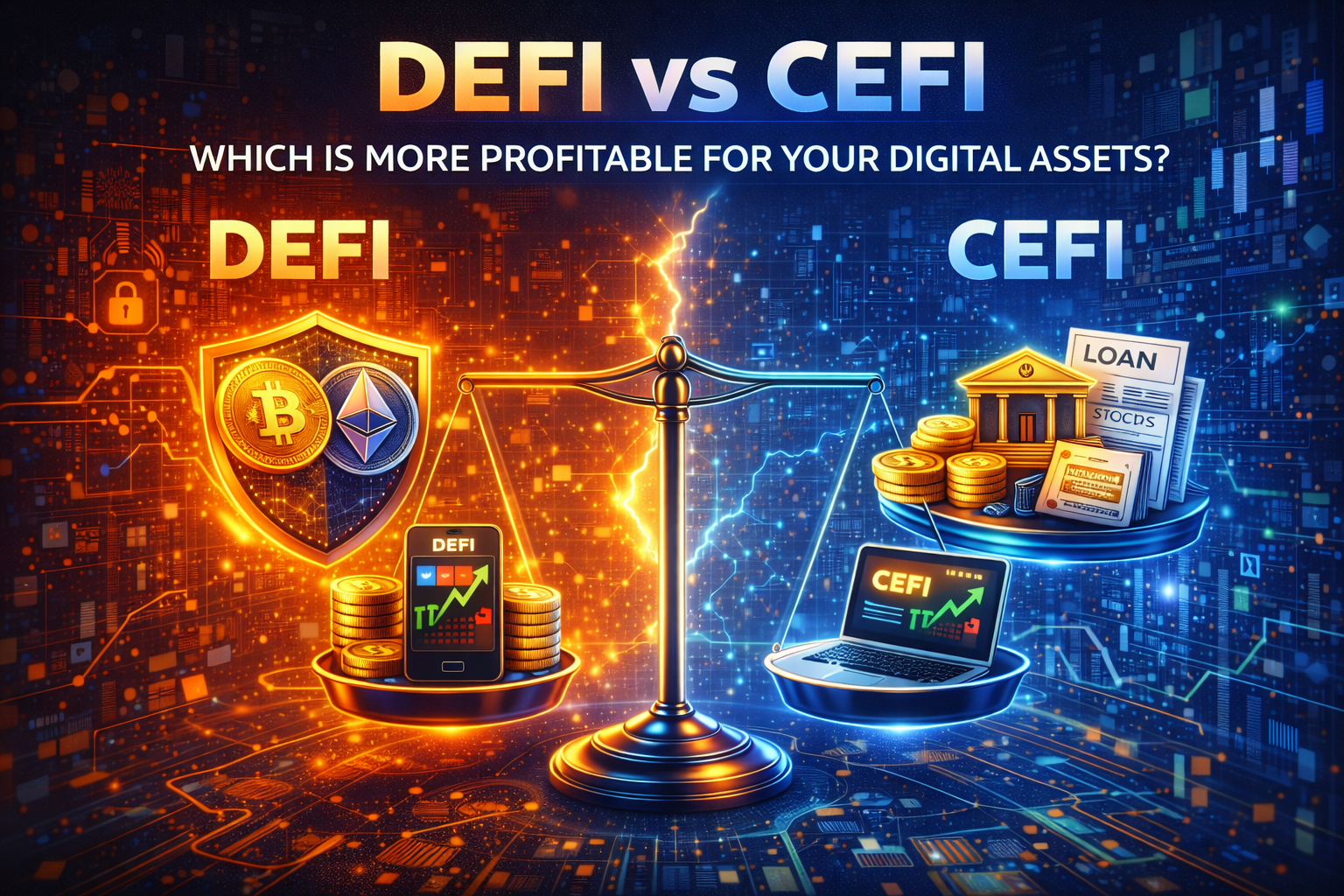
  • DeFi vs CeFi: Which Option Is More Profitable for Your Digital Assets?

    DeFi vs CeFi: Which Option Is More Profitable for Your Digital Assets?

    The cryptocurrency ecosystem has expanded far beyond simple peer-to-peer payments. Today, investors can choose between two major financial models to manage and grow their digital assets: Decentralized Finance (DeFi) and Centralized Finance (CeFi). Each approach offers distinct advantages, risks, and profit opportunities, making the choice between them a critical decision for crypto users.

    Understanding how DeFi and CeFi work, and how they differ in terms of profitability, security, and accessibility, is essential for anyone looking to optimize returns on digital assets.

    Understanding DeFi: Finance Without Intermediaries

    Decentralized Finance, or DeFi, refers to a collection of financial applications built on blockchain networks that operate without centralized intermediaries. Instead of banks or financial institutions, DeFi relies on smart contracts—self-executing code that automatically enforces rules and transactions.

    Common DeFi services include lending and borrowing platforms, decentralized exchanges (DEXs), yield farming protocols, and liquidity pools. Users maintain full control over their funds by connecting personal wallets directly to these platforms.

    One of DeFi’s most attractive features is permissionless access. Anyone with an internet connection and a crypto wallet can participate, regardless of location or banking status.

    Understanding CeFi: Traditional Structure in a Digital World

    Centralized Finance, or CeFi, refers to crypto services provided by centralized platforms such as exchanges, lending services, and custodial wallets. These platforms act as intermediaries, managing user funds and facilitating transactions.

    CeFi platforms typically offer user-friendly interfaces, customer support, and regulatory compliance. Services often include crypto trading, staking, interest-bearing accounts, and fiat on-ramps.

    For many users, CeFi serves as the entry point into crypto due to its simplicity and familiarity.

    Profit Opportunities in DeFi

    DeFi is often associated with higher potential returns. Yield farming, liquidity provision, and staking can offer attractive annual percentage yields (APYs), especially during periods of high demand or protocol growth.

    DeFi protocols distribute rewards through native tokens, providing users with both income and potential capital appreciation. Early adopters of successful protocols have historically achieved significant returns.

    Additionally, DeFi allows composability, meaning users can stack multiple strategies—such as lending assets, borrowing against them, and reinvesting—to maximize profitability.

    However, higher returns usually come with higher risks.

    Profit Opportunities in CeFi

    CeFi platforms generally offer more stable and predictable returns. Interest rates on savings accounts or staking products are typically lower than DeFi yields, but they are often more consistent.

    Many CeFi platforms also provide fixed-term products with guaranteed returns, appealing to investors seeking income without constant management. Promotions, loyalty programs, and institutional-grade trading tools can further enhance profitability.

    For users who prioritize convenience and risk management, CeFi offers a more controlled environment.

    Risk Factors: The Cost of Profitability

    When evaluating profitability, risk must be considered alongside returns.

    In DeFi, smart contract vulnerabilities pose a significant risk. Bugs or exploits can lead to loss of funds, sometimes within minutes. Rug pulls and malicious projects further increase risk, especially in less established protocols.

    Market volatility can also impact DeFi strategies. High yields may be offset by declining token prices or impermanent loss in liquidity pools.

    CeFi risks are different. Users must trust platforms to manage funds responsibly. Exchange hacks, insolvency, or regulatory shutdowns can result in frozen or lost assets. While some platforms offer insurance or compensation mechanisms, these are not always guaranteed.

    Control and Ownership of Assets

    A key philosophical difference between DeFi and CeFi lies in asset ownership.

    DeFi users retain full custody of their assets at all times. This aligns with the original principles of cryptocurrency—financial sovereignty and self-custody. Profitability is achieved without relinquishing control.

    In contrast, CeFi requires users to deposit funds into platform-controlled wallets. While this simplifies operations, it introduces counterparty risk. Profits are earned at the cost of partial control.

    For investors who value autonomy, DeFi may be more appealing despite higher complexity.

    Accessibility and User Experience

    CeFi excels in accessibility. Platforms are designed for ease of use, often resembling traditional banking or trading apps. Customer support, educational resources, and compliance features make CeFi suitable for beginners.

    DeFi, on the other hand, has a steeper learning curve. Users must understand wallets, gas fees, blockchain networks, and security practices. Mistakes can be costly, as transactions are irreversible.

    However, as DeFi interfaces improve and educational resources expand, this gap is gradually narrowing.

    Regulation and Compliance Considerations

    Regulation plays an increasingly important role in determining profitability and risk.

    CeFi platforms are more exposed to regulatory changes. While regulation can enhance trust and stability, it may also limit access to certain products or impose restrictions that affect returns.

    DeFi operates in a more decentralized and global environment. While this reduces regulatory friction, it also creates uncertainty regarding future compliance requirements.

    Investors should consider how regulatory developments may impact both models in the long term.

    Hybrid Strategies: Combining DeFi and CeFi

    For many investors, the most profitable approach is not choosing one model over the other, but combining both.

    CeFi can serve as a base for fiat access, stable returns, and ease of use, while DeFi offers higher-risk, higher-reward opportunities. Using CeFi for onboarding and DeFi for advanced strategies allows investors to balance profitability and risk.

    Diversification across both systems reduces exposure to any single point of failure.

    Long-Term Profitability: Which Wins?

    There is no universal answer to whether DeFi or CeFi is more profitable. Profitability depends on market conditions, user expertise, risk tolerance, and investment goals.

    DeFi tends to reward active users who are willing to research protocols, manage risk, and adapt quickly. CeFi suits investors seeking passive income, simplicity, and regulatory reassurance.

    As the crypto ecosystem matures, the line between DeFi and CeFi may continue to blur, with hybrid platforms offering the best of both worlds.

    Conclusion: Choosing the Right Path for Your Assets

    DeFi and CeFi represent two distinct approaches to digital finance, each with unique strengths and limitations. DeFi offers autonomy, innovation, and potentially higher returns, while CeFi provides structure, ease of use, and stability.

    For investors seeking maximum profitability, understanding both systems is essential. Rather than viewing DeFi and CeFi as competitors, they can be seen as complementary tools in a diversified crypto strategy.

    Ultimately, the most profitable option is the one that aligns with your knowledge, risk tolerance, and long-term vision for your digital assets.

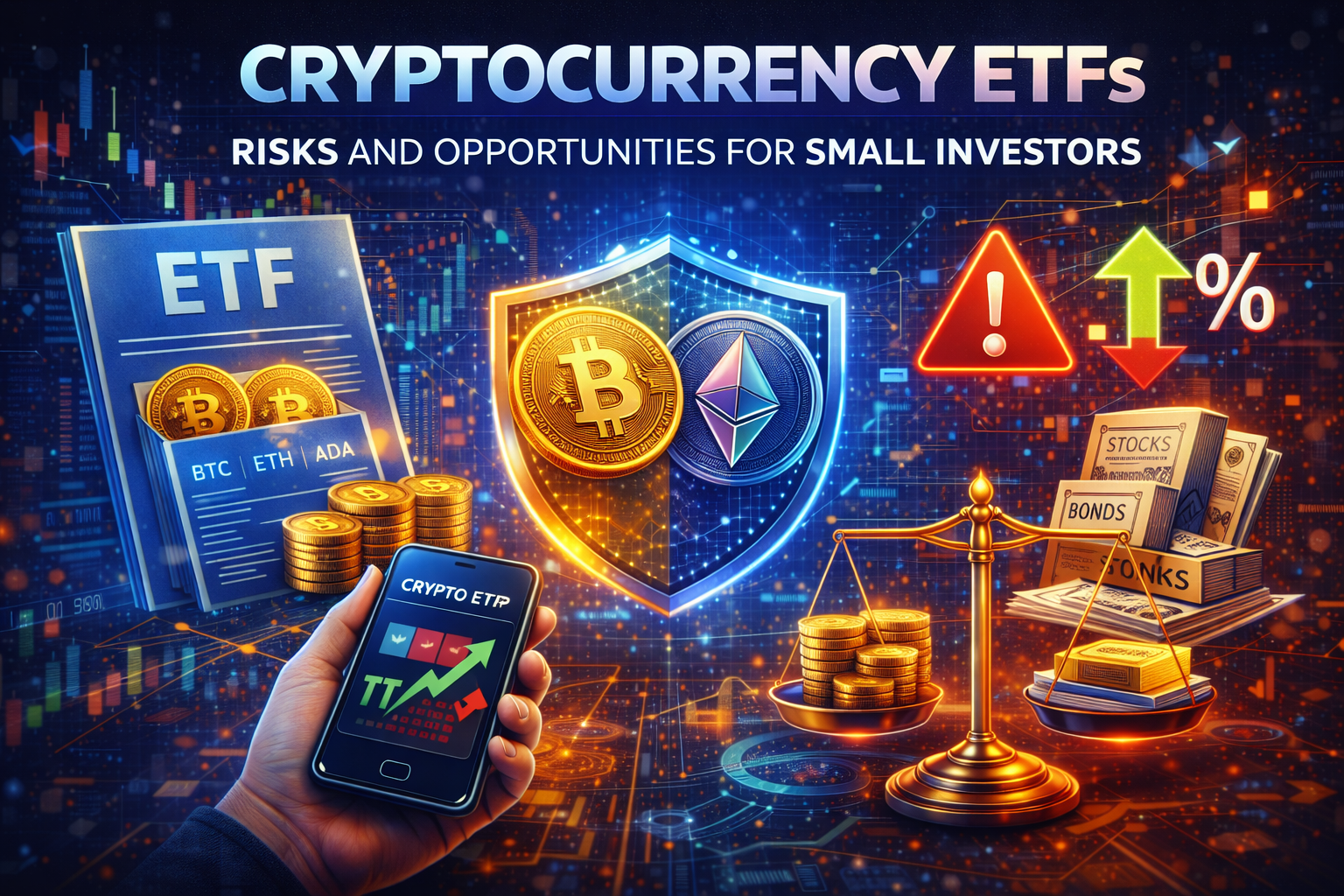
  • Cryptocurrency ETFs: Risks and Opportunities for Small Investors

    Cryptocurrency ETFs: Risks and Opportunities for Small Investors

    The introduction of cryptocurrency exchange-traded funds (ETFs) has marked a significant milestone in the evolution of digital asset investing. By combining traditional financial instruments with exposure to cryptocurrencies, crypto ETFs have opened the door for small investors who may have previously been hesitant to enter the crypto market directly. However, while these products offer convenience and accessibility, they also come with unique risks that must be carefully considered.

    Understanding how crypto ETFs work, their advantages, and their potential drawbacks is essential for retail investors seeking to make informed decisions in an increasingly complex financial landscape.

    What Are Cryptocurrency ETFs?

    A cryptocurrency ETF is a financial product that tracks the price of one or more digital assets and trades on traditional stock exchanges. Instead of purchasing and storing cryptocurrencies directly, investors buy shares of an ETF that provides exposure to the underlying asset.

    Some crypto ETFs hold actual cryptocurrencies, such as Bitcoin or Ethereum, while others use futures contracts or track crypto-related companies. This structure allows investors to gain exposure to the crypto market through familiar brokerage accounts without managing wallets or private keys.

    For small investors, this simplicity can be particularly appealing.

    Why Crypto ETFs Appeal to Small Investors

    One of the main reasons crypto ETFs attract retail investors is accessibility. Traditional crypto investing requires setting up digital wallets, understanding blockchain networks, and managing security risks. ETFs eliminate many of these complexities.

    Additionally, crypto ETFs are regulated financial products in many jurisdictions. This regulatory oversight can provide investors with a greater sense of security compared to unregulated exchanges or platforms. The ability to trade ETFs during market hours, use limit orders, and integrate them into retirement accounts also adds to their appeal.

    For investors who want exposure to crypto without full immersion in the ecosystem, ETFs offer a convenient entry point.

    Opportunities Offered by Crypto ETFs

    1. Simplified Market Access

    Crypto ETFs allow investors to participate in the crypto market using traditional investment platforms. This lowers the barrier to entry and enables diversification without technical expertise.

    Small investors can allocate a portion of their portfolios to crypto alongside stocks, bonds, and other assets, improving overall diversification.

    2. Reduced Custody Risks

    One of the biggest concerns in crypto investing is security. Managing private keys and protecting wallets from hacks can be challenging, especially for newcomers.

    With ETFs, custody is handled by professional institutions. While this does not eliminate risk entirely, it reduces the likelihood of user error leading to lost funds.

    3. Portfolio Diversification

    Crypto ETFs can help diversify portfolios by providing exposure to assets that may not be closely correlated with traditional markets. Over the long term, this diversification may improve risk-adjusted returns.

    Some ETFs also offer exposure to multiple crypto assets or blockchain-related companies, spreading risk across different segments of the industry.

    4. Liquidity and Transparency

    ETFs are typically liquid and transparent, with pricing and holdings disclosed regularly. This transparency allows investors to track performance and understand what they own.

    For small investors, this level of clarity can be reassuring compared to complex or opaque investment vehicles.

    Risks Associated with Crypto ETFs

    1. Market Volatility

    While ETFs simplify access, they do not eliminate crypto’s inherent volatility. Prices can fluctuate significantly in short periods, potentially leading to losses for investors who are unprepared.

    Small investors must recognize that crypto ETFs are not low-risk products, even when traded on regulated exchanges.

    2. Tracking Errors and Fees

    Some crypto ETFs, especially those based on futures contracts, may not perfectly track the price of the underlying cryptocurrency. Factors such as contract rollovers, management fees, and market conditions can create discrepancies.

    Over time, these tracking errors and fees can reduce returns, particularly for long-term investors.

    3. Limited Control Over Assets

    Investing through an ETF means investors do not own the underlying cryptocurrency. They cannot use it for transactions, staking, or participation in decentralized applications.

    For investors interested in the broader utility of crypto, ETFs provide financial exposure but not functional access.

    4. Regulatory and Structural Risks

    Crypto ETFs are subject to regulatory decisions that can impact their structure or availability. Changes in regulations, tax treatment, or approval status may affect performance or investor access.

    Additionally, reliance on custodians and intermediaries introduces counterparty risk, which goes against the decentralized philosophy of cryptocurrencies.

    Comparing ETFs to Direct Crypto Ownership

    For small investors, the choice between crypto ETFs and direct ownership depends on goals and risk tolerance. ETFs prioritize convenience and regulatory oversight, making them suitable for passive exposure.

    Direct ownership offers greater control, flexibility, and access to the full crypto ecosystem, but requires more technical knowledge and security responsibility.

    Some investors choose a hybrid approach, combining ETFs for long-term exposure with direct holdings for active participation.

    The Role of Education in ETF Investing

    Education is critical when investing in crypto ETFs. Investors should understand the ETF’s structure, underlying assets, fees, and risk profile before committing capital.

    Reading prospectuses, tracking performance metrics, and staying informed about regulatory developments can help small investors make better decisions.

    Without proper knowledge, the ease of ETFs may create a false sense of security.

    Long-Term Outlook for Crypto ETFs

    As the crypto market matures, ETFs are expected to evolve. Future products may include broader asset baskets, improved tracking mechanisms, and lower fees.

    Institutional adoption and clearer regulatory frameworks may enhance stability and liquidity, benefiting small investors. However, increased mainstream participation could also reduce some of the outsized returns historically associated with early crypto adoption.

    Crypto ETFs are likely to become a standard component of diversified portfolios rather than speculative fringe products.

    Common Mistakes Small Investors Should Avoid

    One common mistake is overallocating to crypto ETFs due to hype or short-term performance. Diversification remains essential, and crypto exposure should align with individual risk tolerance.

    Another mistake is failing to understand the ETF’s mechanics, particularly for futures-based products. Not all crypto ETFs are created equal, and their performance can vary significantly.

    Emotional trading—buying during peaks and selling during downturns—can undermine long-term success.

    Conclusion: A Balanced Perspective for Small Investors

    Cryptocurrency ETFs represent a powerful bridge between traditional finance and digital assets. For small investors, they offer an accessible, regulated way to gain exposure to the crypto market without navigating its technical complexities.

    However, these opportunities come with risks that should not be underestimated. Volatility, fees, and structural limitations mean that crypto ETFs require the same level of diligence as any other investment.

    By approaching crypto ETFs with education, discipline, and realistic expectations, small investors can harness their potential while managing downside risk. In a rapidly evolving financial environment, informed decision-making remains the key to turning opportunity into sustainable growth.

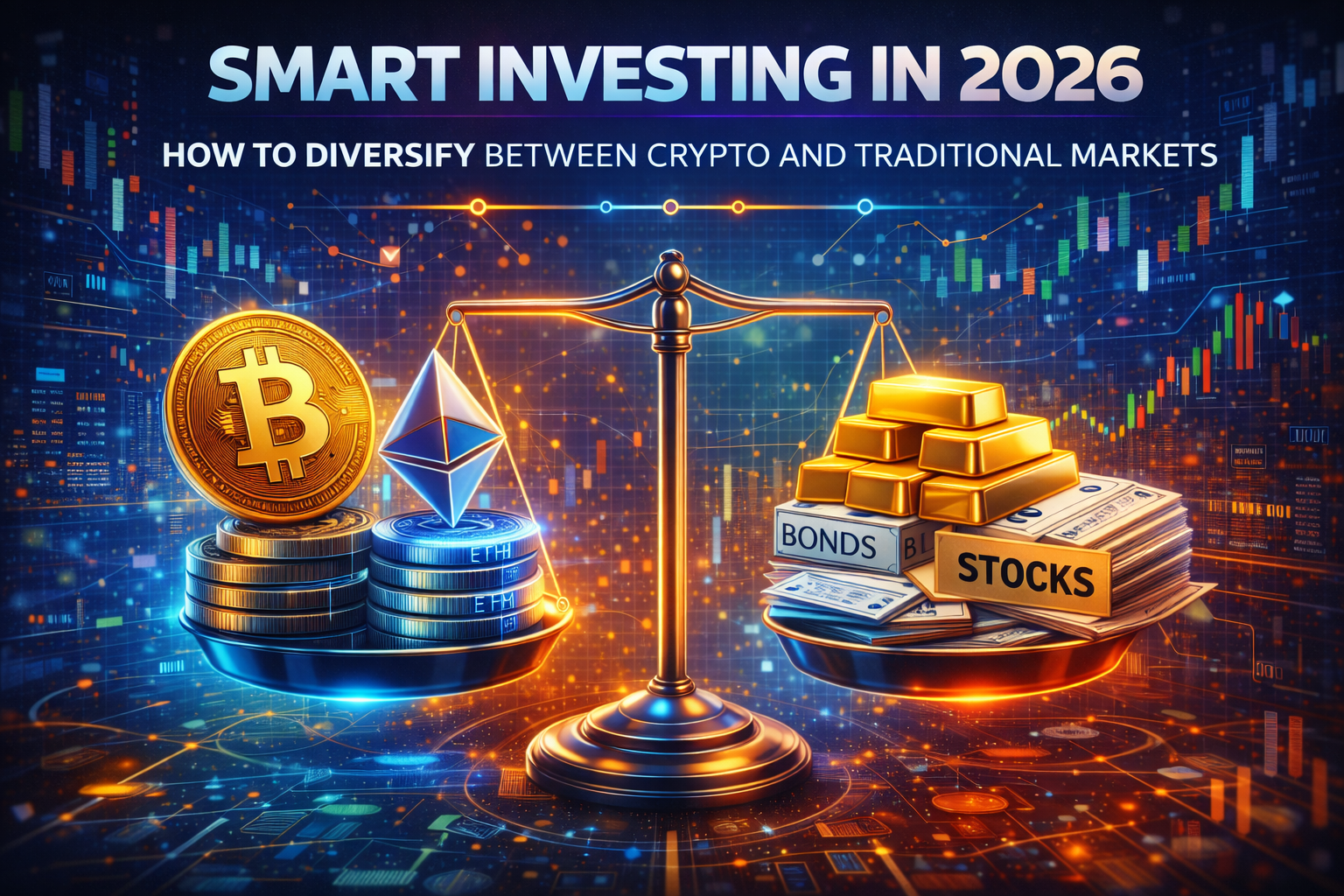
  • Smart Investing in 2026: How to Diversify Between Crypto and Traditional Markets

    Smart Investing in 2026: How to Diversify Between Crypto and Traditional Markets

    As global financial markets continue to evolve, 2026 is shaping up to be a pivotal year for investors seeking balanced, resilient portfolios. The rapid growth of cryptocurrencies, combined with ongoing shifts in traditional markets such as stocks, bonds, and commodities, has changed how diversification is approached. No longer is diversification limited to equities and fixed income; digital assets now play an increasingly important role in modern investment strategies.

    Smart investing in 2026 requires understanding how crypto and traditional assets can complement each other, managing risk effectively, and adapting to an environment shaped by technology, regulation, and macroeconomic uncertainty.

    Why Diversification Matters More Than Ever

    Diversification has always been a cornerstone of sound investing. By spreading capital across different asset classes, investors aim to reduce risk while maintaining long-term growth potential. However, the financial landscape of 2026 presents unique challenges: persistent inflation concerns, evolving monetary policies, geopolitical uncertainty, and rapid technological disruption.

    Cryptocurrencies introduce a new dimension to diversification. While they are more volatile than traditional assets, they also offer exposure to innovation, decentralized finance, and alternative value systems that are not directly tied to central banks or corporate earnings.

    A well-constructed portfolio in 2026 recognizes that no single asset class consistently outperforms under all conditions.

    The Role of Traditional Markets in a Modern Portfolio

    Traditional markets remain the foundation for most investment strategies. Stocks, bonds, real estate, and commodities continue to offer stability, income generation, and long-term appreciation.

    Equities provide exposure to corporate growth and innovation, particularly in sectors such as technology, healthcare, and renewable energy. Bonds, while offering lower returns, contribute stability and predictable income, especially during periods of market stress. Commodities like gold and energy assets can act as hedges against inflation and geopolitical risks.

    In 2026, many investors are focusing on quality assets—companies with strong balance sheets, sustainable business models, and global reach. These characteristics help portfolios withstand economic cycles and market volatility.

    Crypto as a Growth and Innovation Asset

    Cryptocurrencies bring a different value proposition. Assets such as Bitcoin, Ethereum, and select altcoins offer exposure to blockchain technology, decentralized applications, and digital financial infrastructure.

    Bitcoin is often viewed as a digital store of value, sometimes compared to gold due to its fixed supply and decentralized nature. Ethereum and other smart contract platforms represent innovation layers, enabling decentralized finance, tokenization, and digital identity systems.

    While crypto markets are volatile, they are also driven by long-term adoption trends rather than traditional corporate performance. This makes them particularly valuable for diversification, as their price movements may not always correlate with stocks or bonds.

    Balancing Risk Between Crypto and Traditional Assets

    One of the most important aspects of diversification is risk management. Cryptocurrencies can deliver significant returns, but they can also experience sharp drawdowns. As a result, allocation size matters.

    In 2026, many financial advisors suggest allocating a modest percentage of a portfolio to crypto—enough to benefit from upside potential without jeopardizing overall stability. The exact allocation depends on individual risk tolerance, investment horizon, and financial goals.

    Younger investors with longer time horizons may allocate a higher percentage to growth-oriented assets like crypto and equities, while more conservative investors may prioritize income-generating and defensive assets.

    Using Stablecoins as a Bridge Between Markets

    Stablecoins play an increasingly important role in diversified portfolios. Pegged to fiat currencies, they offer price stability while maintaining blockchain-based efficiency.

    In 2026, stablecoins are widely used for liquidity management, cross-border transfers, and yield-generating strategies within decentralized finance. They allow investors to move quickly between crypto and traditional opportunities without exposure to extreme volatility.

    For example, stablecoins can serve as a temporary safe haven during market downturns or as a tool to earn passive income through low-risk lending platforms.

    Correlation and Market Cycles

    Understanding correlation between asset classes is essential for effective diversification. During periods of economic stress, traditional assets such as equities and crypto may move in the same direction, reducing diversification benefits.

    However, over longer timeframes, crypto and traditional markets often follow different cycles driven by adoption trends, technological upgrades, and regulatory developments. This cyclical behavior can enhance portfolio resilience when allocations are adjusted strategically.

    Rebalancing periodically—selling assets that have outperformed and reallocating to underweighted positions—helps maintain diversification and manage risk.

    Regulation and Institutional Influence

    By 2026, regulation plays a larger role in shaping both crypto and traditional markets. Clearer regulatory frameworks have increased institutional participation in digital assets, improving liquidity and reducing some systemic risks.

    At the same time, regulation has reinforced the importance of compliance, transparency, and due diligence. Investors must stay informed about evolving rules, tax implications, and reporting requirements across asset classes.

    Institutional involvement has also blurred the line between crypto and traditional finance, with tokenized stocks, bonds, and real-world assets becoming more common.

    Technology and Access to Markets

    Advancements in technology have democratized access to both crypto and traditional investments. Fractional shares, automated investment platforms, and decentralized protocols allow investors to build diversified portfolios with lower capital requirements.

    In 2026, artificial intelligence and data analytics help investors analyze market trends, optimize allocations, and manage risk more efficiently. However, technology should complement—not replace—fundamental research and disciplined decision-making.

    Common Mistakes to Avoid

    One common mistake is overexposure to a single asset class due to hype or short-term performance. Chasing returns often leads to poor timing and increased risk.

    Another mistake is neglecting traditional assets in favor of crypto or vice versa. True diversification requires balance, not extremes. Investors should also avoid neglecting liquidity needs, tax planning, and long-term goals when allocating capital.

    Emotional decision-making remains one of the biggest threats to successful investing, especially in volatile markets.

    Conclusion: Building a Resilient Portfolio for 2026

    Smart investing in 2026 is not about choosing between crypto and traditional markets—it is about understanding how both can work together. A diversified portfolio that combines innovation-driven digital assets with stable, income-generating traditional investments is better positioned to navigate uncertainty.

    Crypto offers growth potential and exposure to transformative technology, while traditional markets provide structure, reliability, and long-term wealth preservation. When managed thoughtfully, this combination allows investors to pursue opportunity without sacrificing stability.

    Ultimately, diversification is not a one-time decision but an ongoing process. By staying informed, managing risk, and maintaining discipline, investors can build portfolios designed not just to survive market cycles, but to thrive in the evolving financial landscape of 2026 and beyond.